You Have Reached the End
Things to keep in mind as you write toward The End

Endings are difficult. Life doesn’t wrap up in a perfect little bow, but our novels are expected to reach a satisfying conclusion. How do we accomplish this?
Think of the three-act structure as one great act. If you were raised in the Western world, you’ve probably internalized the three-act structure. As writers, we are taught to view our work in three parts: Beginning, Middle, End. But these are not silos. The beginning speaks to the middle, which speaks to the end, which speaks to the beginning. Your manuscript should be in conversation with itself the whole time. Your novel is a finely woven blanket, not a patchwork quilt. If you find yourself desperately pigeon-holing your work into a three-act structure, put the formula aside. Look at your book as a whole instead.
Your ending starts at the beginning. The end should inform every scene and chapter. If you’re an outliner, you likely have an idea of where your story will end before you begin. Use that knowledge as a bullseye. Your quiver is full of chapters and each arrow should be guided in that direction. If you aren’t an outliner, this can happen in revision.
Don’t ask: What happens? Instead, ask: How does it happen? What choices did your characters make that led them to this ending? When were those choices made and how did they unfold?
Consider your reader. How do you want them to feel when they finish your book? Ideally, you want them to sit with your story for a moment after they reach the end. What do you want those moments to feel like for them? Do you want readers unsettled? Do you want them to cry and laugh at the same time? Do you want them to have unanswered questions and if so, what do you want those questions to be?
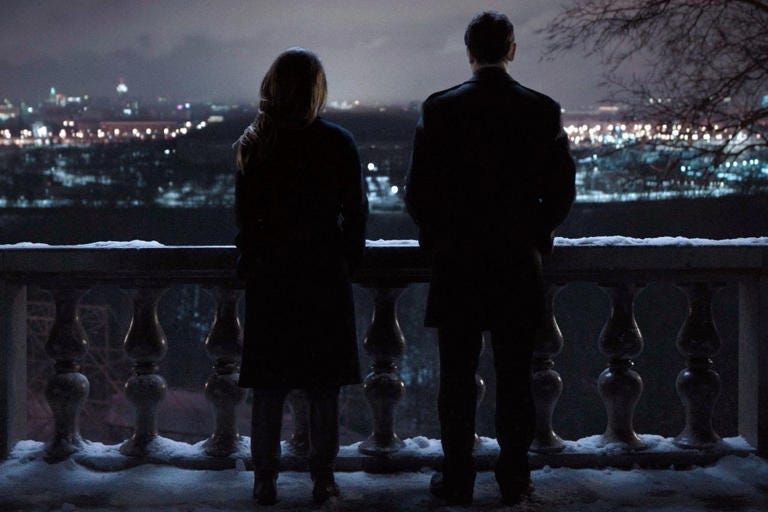
Revisit well-crafted endings, whether in books or on screen. What are some of your favorite fictional endings? What did you love about them? How did the writers arrive at this ending? What made it feel surprising, but inevitable? Rewatch or reread the media with the ending in mind. In what ways is the ending always in sight? One of my favorite endings of all time was the series finale of The Americans. Ironically (or perhaps inevitably), the title of the episode is START.
Love this line Erin: Your manuscript should be in conversation with itself the whole time. Absolutely! Thank you for this clear representation of endings…and the whole ms!
“Surprising, but inevitable” . . . that is exactly the kind of ending I prefer most. It’s easy enough to create a “surprise” ending. What’s hard is a surprise ending that doesn’t feel cheap or contrived. I’m a huge fan of fabulous endings. I think one of the best of all time (kidlit or otherwise) is that of Rebecca Stead’s When You Reach Me. Just breathtaking.